
Solar panels
Solar panels for UK homes
Solar panels use daylight to generate electricity for your home. Here's a straightforward guide to how they work, what affects their performance and what they could mean for your energy bills.
How solar panels work
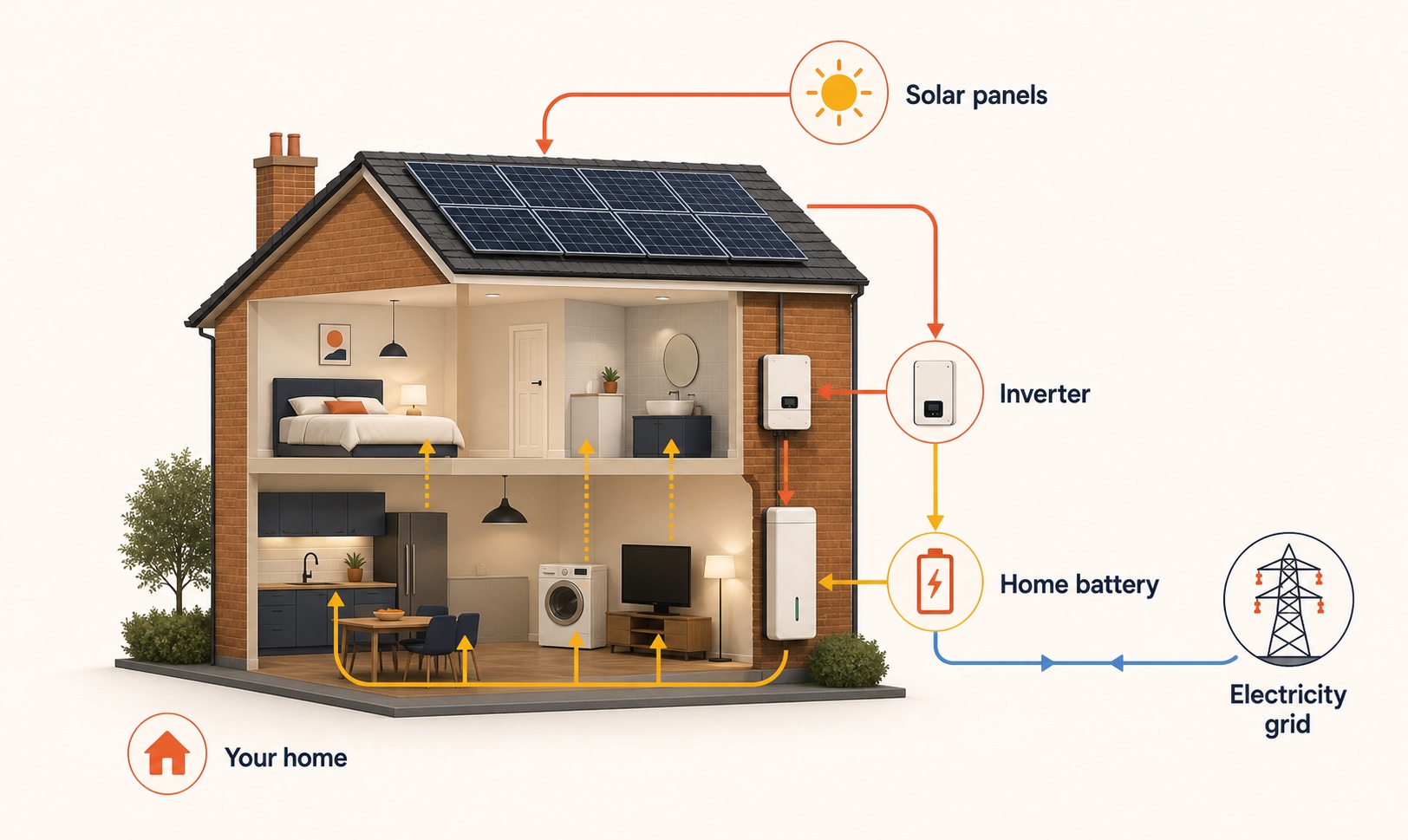
Solar panels on your roof generate electricity during daylight hours. Your home can use that electricity as it's produced.
If your panels generate more electricity than your home needs at the time, the surplus can be stored in a battery, if you have one, or exported to the grid.
What affects how much they generate
The amount of electricity your panels generate depends on several factors, including:
- Roof direction and pitch
- Shading from trees, chimneys or nearby buildings
- Available roof space and how many panels can be installed
- Weather and time of year
- The system design recommended for your home
What could solar mean for your bills?
Using electricity generated by your own solar panels can reduce the amount of electricity you need to buy from the grid.
How much you could save depends on your home, energy usage, system design, electricity tariff, weather and installation cost. We won't give you a made-up savings figure from the suitability check.
A selected installation partner can assess your property and discuss potential costs and savings as part of a consultation.
Can I get paid for exporting electricity?
If you're eligible, you may be able to receive payments for electricity you export to the grid through the Smart Export Guarantee (SEG).
The rates and eligibility are set by individual electricity suppliers and can vary.
What happens at a consultation?
If you choose to speak with an installation partner, they'll be responsible for assessing your property and providing a recommendation.
They'll typically consider:
- Your roof and available space
- Your electricity usage
- Shading and other property constraints
- The most suitable system design
- Whether battery storage could be useful
- The installation cost and available payment options
You'll then be able to decide whether you want to go ahead. There is no obligation to proceed.
Could solar work for your home?
Find out if your home could be suitable for solar with our free, no-obligation solar check.
Check your eligibilityFree check · No obligation · Takes around 2 minutes